The 'I'll Use It One Day' Drawer: A Guilt-Free Pre-Christmas Sort-Out
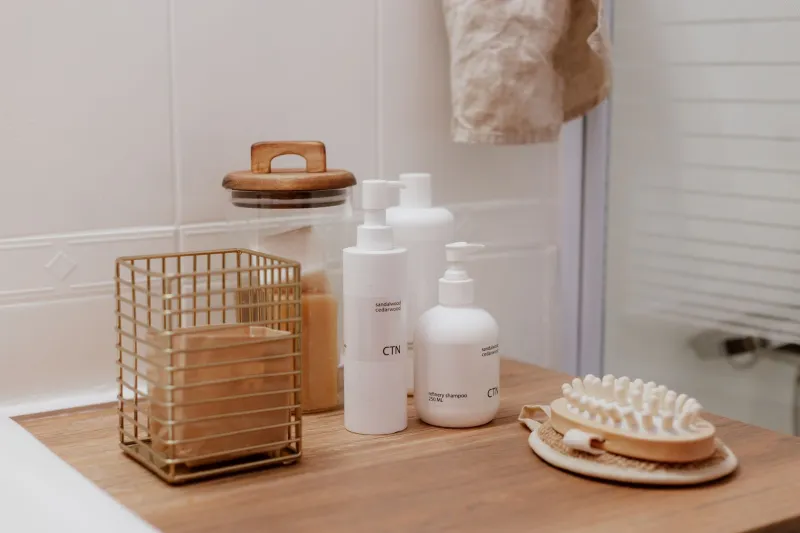
It's a dark Tuesday in mid-November, the heating is on, and you're hunting for a hairband. Instead you find three bottles of the same body lotion, a face mask in a sachet you can't date, a serum you bought in a burst of January optimism, and something in a frosted glass jar with roughly a teaspoon left in the bottom. That's the drawer. Everyone has it. Nobody talks about it.
With December approaching, the drawer is about to get worse. Party-season panic-buying, gift sets from well-meaning relatives, the Boots three-for-two you didn't fully think through. So before the avalanche arrives, let's do a gentle sort-out. No lectures, no throwing away things you love, and absolutely no guilt about the money already spent — it's gone either way.
Start with a towel, not a bin bag
Give yourself twenty minutes, a bath towel to work on, and a mug of something hot. The towel matters: things will leak, and a towel makes the whole job feel temporary and tidy rather than dramatic.
Take everything out. All of it, including the travel minis, the samples at the back, and the tubes you've been squeezing flat for a fortnight. Lay it out and just look. Most people are genuinely surprised — not by how much there is, but by how much of it is the same thing. Four moisturisers. Two open bottles of micellar water. A lip balm in every coat pocket's honour.
Don't sort yet. Just look.
That little open-jar symbol, explained
On the back of most products you'll find a tiny drawing of a jar with the lid flipped up and a number inside — 6M, 12M, 24M. That's the PAO, or period after opening. It means: once you break the seal, use it within that many months. Six months for a lot of eye creams, twelve for most moisturisers, twenty-four for many body products and perfumes.
The PAO is not the same as the expiry date, and this is where people get muddled. If a product has a shelf life under thirty months, you'll usually see an hourglass symbol with a date instead. If it's over thirty months, you get the PAO jar. Either way, the clock only truly starts when you open it — which is why an unopened gift set from two Christmases ago might still be fine, while the jar you've had on the go since spring probably isn't.
If you can't remember when you opened something, be honest with yourself. Roughly, if you can't date it, it's older than you think.
Three questions, no judgement
Hold each product and ask:
Does it smell right? Not the fragrance it's meant to have — that may have faded. I mean has it turned, gone sharp, or started to smell like old cooking oil? If yes, out.
Has it changed? Separation, a watery layer on top, a colour shift, grit, or a texture that's gone thick and tacky are all signs it's done.
When did I last actually reach for it? If the answer is 'before the clocks last went back' and it's already open, that's your answer too.
That's it. You don't need a chemistry degree. Your nose and your memory are surprisingly good at this.
The tricky characters
Samples and sachets. These breed in the dark. Keep a maximum of three you genuinely want to try in the next month, and put them somewhere visible — taped to the bathroom mirror is very effective. The rest can go.
Gift sets you didn't choose. You're allowed to pass them on. A sealed set can go to a school raffle, a food bank collection, or a friend who'll love it. Nobody is checking.
The 'someday' product. The expensive serum for the version of you who does a full routine twice a day. If that person hasn't turned up in eighteen months, the product isn't motivating you — it's just quietly making you feel behind. Bin it, or use it on your décolletage and legs, which are far less fussy than your face.
Suncream. Check the date on the bottle. Out-of-date SPF doesn't protect properly, and there's no point gambling on it.
Use it up, where it's safe
Some things don't have to be wasted. A face cream that's fine but not your favourite makes a perfectly good hand cream. Half a bottle of body lotion can go by the kitchen sink. A shampoo that didn't suit your scalp will wash a makeup brush nicely.
The one rule: nothing questionable goes on your face or anywhere near your eyes. If you wouldn't put it on your face, don't put it on your neck either — it's thinner skin than you think.
The bit nobody says out loud
Here's the truth that salons see every week: most people aren't short of products. They're short of time, and of someone to actually do the thing properly for them.
Add up what the drawer cost you. Even modestly, it's usually far more than a single appointment at a small local salon. And unlike the drawer, an appointment gets used. You turn up, someone who knows what they're doing sorts you out, and you leave with your shoulders somewhere near your ears where they belong.
So if you're eyeing the pre-Christmas sales and wondering whether to stock up 'just in case', try this instead: finish the sort-out, write down the two or three things you're genuinely running low on, and buy only those. Then put the rest of the money towards a proper treatment — a facial, a brow tidy, a back massage. Something with a person in it.
Then book the thing you actually wanted
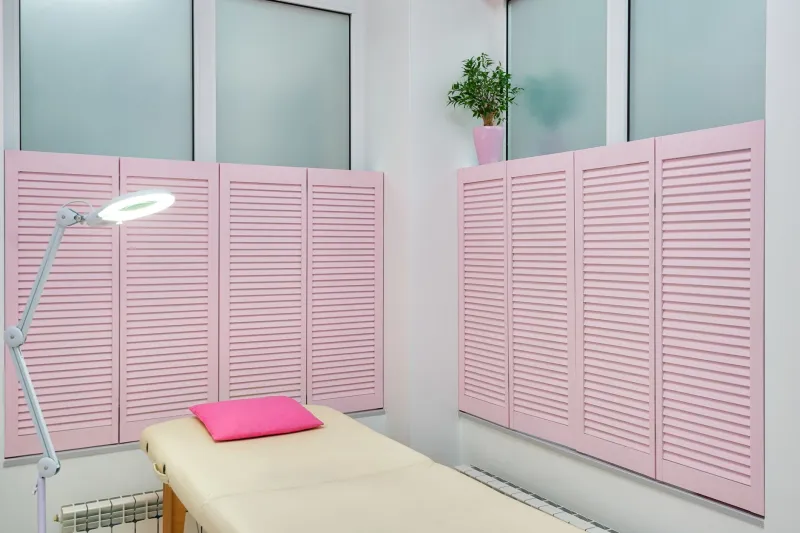
If you've never been to the Hut before, this is a nice moment to start, because November is quieter than December and you'll get the pick of the appointment times. Mention any sensitivities when you book — we'll always patch test new products at least twenty-four hours ahead, which is a small bit of admin now for a much more relaxed treatment later.
And bring your questions. Half a bottle of something confusing is exactly the sort of thing we're happy to look at.
A calmer shelf, a calmer December
By the time you finish, you should have a shelf with maybe eight things on it, all of which you'll actually use, plus a vague idea of what you need to replace in the new year. No guilt, no landfill guilt either — most local councils take empty beauty packaging at larger supermarkets, and empty glass jars clean up nicely as hairband storage.
Then run a bath, use the last of something lovely, and let December arrive without a drawer full of good intentions behind you. You've got enough on.